Download our App


Directions to Ithra
We are Closed Today
By Hassan Albather
“Reading a book is a conversation between you and the author. And it is up to you to keep your end of the conversation alive.”
- Mortimer J. Adler, American philosopher, educator and former Chairman of the Board of Editors of the Encyclopaedia Britannica (1902 – 2001)
Don’t just read the book; challenge it. Talk back to it.
We talk a lot about the importance of reading, in schools, in our homes, in cultural spaces. It’s praised as a noble pursuit, a quiet refuge, a source of comfort, the luminous torch for an inquisitive mind… you get the gist. But we rarely talk about how to read. More specifically: how to read well. And in this blog post, I will share my thoughts on how to make the most out of your reading, based on my personal experience and passion for the subject.
The act of reading and being bookish are easy to romanticize, and rightfully so, books are treasured far beyond their material value, they are deemed as sentimental objects, and reading in and of itself is regarded as a performative act that signals intelligence, taste or virtue. But reading well isn’t about appearances. It’s not about finishing 50 books a year (almost a book per week) or reading only the classics. It is not even about agreeing with the author.
Reading well means reading critically and that starts by treating the book as a conversation, a three-way dialogue between you, the text and the author, not as a command. It is a swift feeling of existing in a self-contained world made manifest by the book and the pleasure of immersive reading.
“Think before you speak. Read before you think. This will give you something to think about that you didn’t make up yourself — a wise move at any age.”
- Fran Lebowitz, American essayist (b. 1950)
Reading Does NOT Mean Passive Consumption
Too often, we approach books passively. We skim the text until we turn the last page and move on. But a critical reader does more than absorb. They engage, question and challenge the ideas in front of them.
Reading this way is slower. It is even less enjoyable at times. But it’s deeper. It leaves a more lasting mark. Taking this approach, you begin to notice how books talk to each other, how topics and ideas are more connected than they seem initially, how authors use structure and genre and how your own thoughts evolve. In due time, you will see that the progress is indirect, incremental.
The fact is that boundaries between genres are more imaginative than clear cut. The reader inevitably has an inkling of the nature of the book before they dig in and they should know this as early in the process as possible; expectations may evolve, but they offer a needed sense of context. Authors do what they can to not only make their works more readable and enjoyable but they also have to shape their manuscripts as befits their subject matter. It makes a difference if the medium is fictional, which is far more forgiving or if it was an expository book, meant to convey knowledge more directly. Authors use text as a means of balancing the space they fill on the page with one occupied by the prospected reader.
Think of narratives as maps drawn so that you may navigate your way through the book, with each paragraph or chapter serving as a route, or a puzzle, that, if fully unlocked will lead to insights and deeper comprehension. Putting active reading in effect, we can compare with more depth books that seemingly belong to one and the same fiction genre. Here are two titles that I thoroughly enjoyed, and they share a somewhat similar setting but, ultimately, could hardly be more distinct.

Consider, for example, Umberto Eco’s Baudolino (2000) and Scott Lynch’s The Lies of Locke Lamora (2006). The two books both deal with tricksters, unreliable narration and worlds shaped by lies, but they diverge strongly in style, purpose and effect. In Baudolino, Eco uses lies to explore how history, myths and narrative are constructed; the reader is constantly left unsure what (if anything) is “true.” In Locke Lamora, Lynch uses lies to drive the plot, yet they are merely part of the elaborate cons, and betrayals that power the story’s tension and keep the narrative alive. Eco asks his readers to think about the nature of truth, while Lynch asks them to cheer, laugh and grit their teeth with his rogues. Eco’s Baudolino is denser and more literary, whereas Lynch’s Locke Lamora is more fast-paced, cinematic.
Comparing these two books that explore a shared theme from different perspectives, it becomes clear that stories serve as fundamental modes of expression, addressing common human values and shared experiences indirectly, or playfully exploring and stretching a complex thought through – what better medium – than a full-fledged metaphor.
The moment you feel relaxed, more at ease with your bookish inclinations and embrace critical reading, books stop being something you consume. They become something you respond to.
How to Read with a Critical Eye
If you’ve ever felt unsure how to “get more” out of your reading, here are a few practical ways to read more actively:
Choose with Intention
You don’t have to read what’s trending or what everyone recommends. Ask yourself: Why this book? Why now? Reading intentionally sharpens your attention before you even begin. There is logic to cultural consumption that may connect you to your communities, particularly when it may lead to enriching conversations; but generally, this is a hallmark of passive reading. Challenging yourself to follow your own paths of interest and inquiry is far more likely to fuel your own active reading inclinations. The screening process before you pick up your next read is just as important, it makes your experience richer and sharpens your reading taste buds.
Annotate and Ask Questions
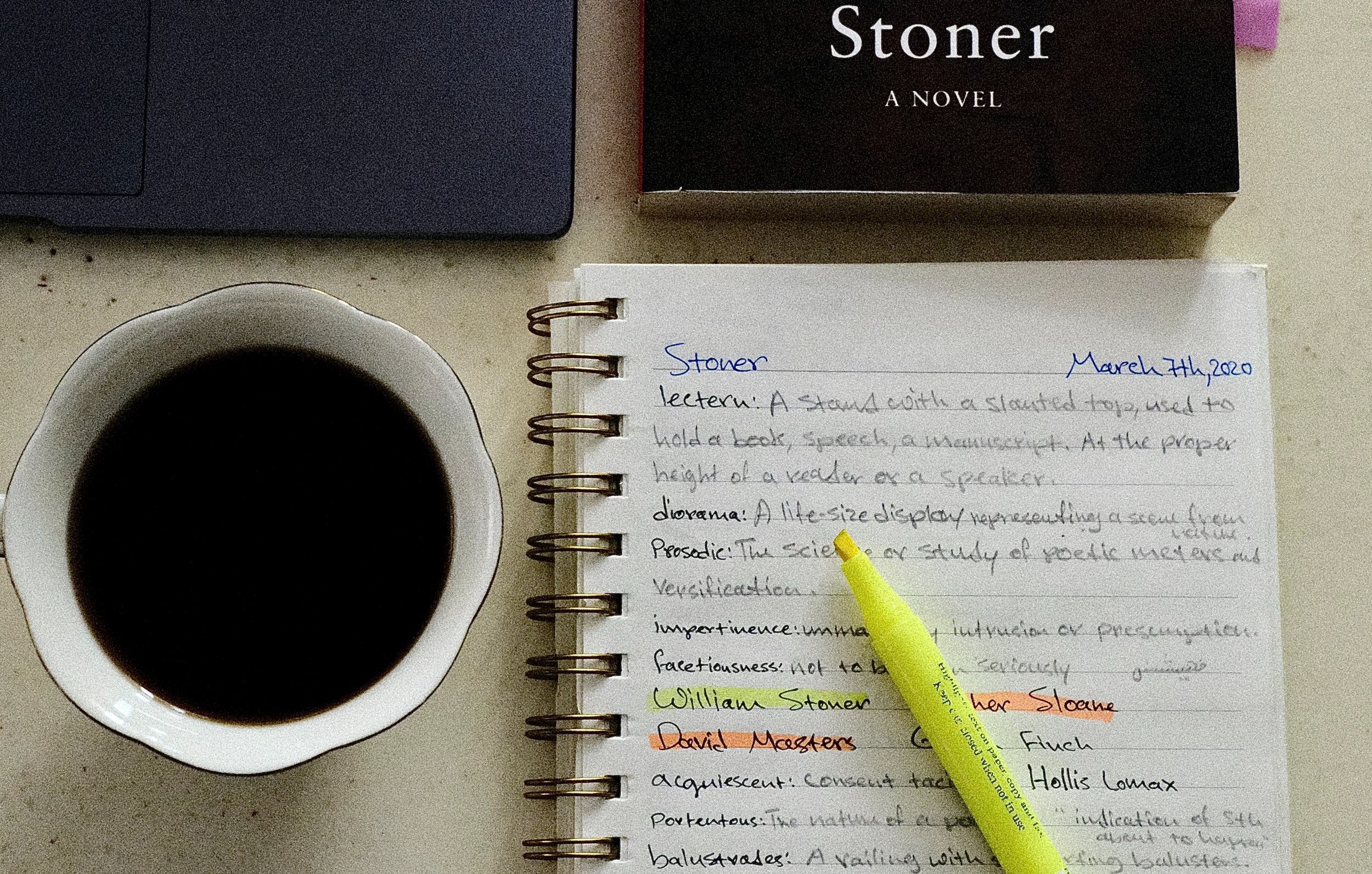
Do not be afraid of damaging the book you’re reading, or worry too much about leaving it in the same pristine condition as when you started; an untouched book is a book unloved. Remember that this is not school, and there is no right or wrong way to do it. Just have fun, and make the most of your reading experience. Write in the margins (I suggest a pencil, but this is your book, not mine!). Highlight passages. Leave comments like “I disagree with this” or “This reminds me of X.” It’s not about being academic. It’s about forming a relationship with the actual, physical book as well as its contents. Marginalia (notes in the margins) can help remind you of what struck you during your reading experience.
Take Notes and Reflect
Many avid consumers of books keep a reading journal, which can even be a simple document on your phone. This does not have to be studious or convoluted, it can just be about what stood out, what confused you, what did you learn about yourself or the subject through your time spent reading the book. Actively take in your experience. Pour your sentiments out, just like you absorbed the ideas communicated to you by the book. This is the way our brains work, and how they deal with ideas and information; they absorb, process, challenge, channel, build on and evolve. Revel in being a sponge.
Embrace the Difficult
Big books. Dense ideas. Famous authors. Don’t let them intimidate you. You’re not supposed to “understand everything” on the first try. There is reciprocity between the production of a brilliant author and the skill of the reader who experiences the book with consideration. That’s the point — they stretch your mind. As well, consider that the reason big books stretch to be the behemoths they are is because they are filled with vast quantities of high-level thought, which is precisely why they are worth your while.
Join the Conversation
Talk about books with others. Even a casual message to a friend or a quick review online can clarify your thoughts and expose you to different perspectives. Being more critical in your reading could help you have the confidence to not only join conversations, but to start them.
The Progress Is Slow and That’s Okay
The benefits of critical reading aren’t always obvious. You won’t wake up the next morning with a palpable sense of being wiser. It took me years, a long pile of DNFs (books that I started but never finished) and an infinite list of TBRs (books that I want to read sometime in the future, I keep telling myself it is soon but there are way too many great books and too little time) that seems to have a mind of its own to realize this. But, over time, you’ll notice subtle shifts and your interlocutors will sense them as well: you listen more carefully, think more clearly and respond more thoughtfully.
You will likely become more empathetic, more open to complexity and less reactive. In turn, you may not be swayed as easily. As an active reader, you will take your time to process what comes your way, and your choices will be wiser, more measured. This is the quiet work that reading does. And it’s why reading should be practiced, not just praised.
Reading well is a skill. And like any skill, it gets sharper with practice.
Final Thought: Read Like You Mean It
Whether you're just getting back into reading, or you’ve been collecting books for years, here’s the challenge: Read bravely. Read slowly. Talk back to the book.
This way you will turn the act of reading from passive absorption into active engagement. And that is how reading becomes more than a pastime. This is how we keep our minds alive and growing.