
Open until 12:30 am
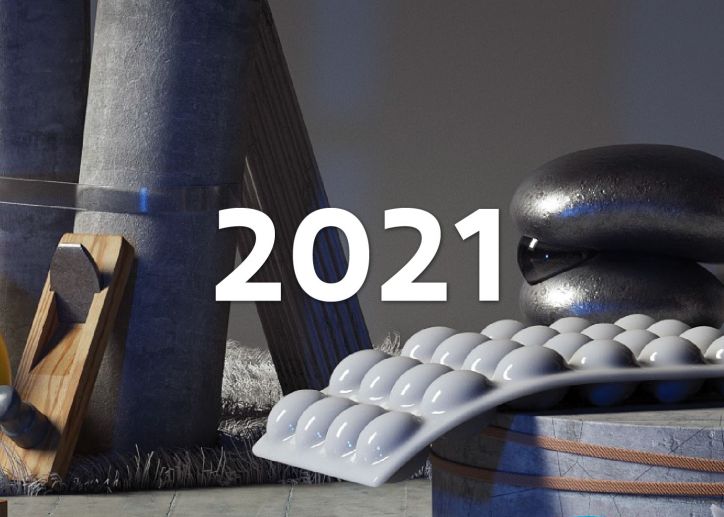
In 2021, Tanween invited designers and architects to register for an immersive challenge entitled “Building Simplexity”. Over the course of 6 days, participants sought to overcome the construction complexities commonly associated with digital design through the simplest of means by constructing a sophisticated traveling pavilion. Utilizing computational power and limited resources, their designs were guided by three key factors: site, scale, and materials.
The Production Partner for this challenge was Attken Do It Center, a store that is a part of Albwardi Group which is driven by a vision of unlocking the artistry and craftsmanship potential in every tool they encounter, with the objective of empowering consumers. The project also benefited from the expertise of the Knowledge Partner, Dr. Kristof Crolla, a renowned Belgian architect who seamlessly merges his architectural practice, Laboratory for Explorative Architecture & Design Ltd. (LEAD), with his role as an Associate Professor at the University of Hong Kong.
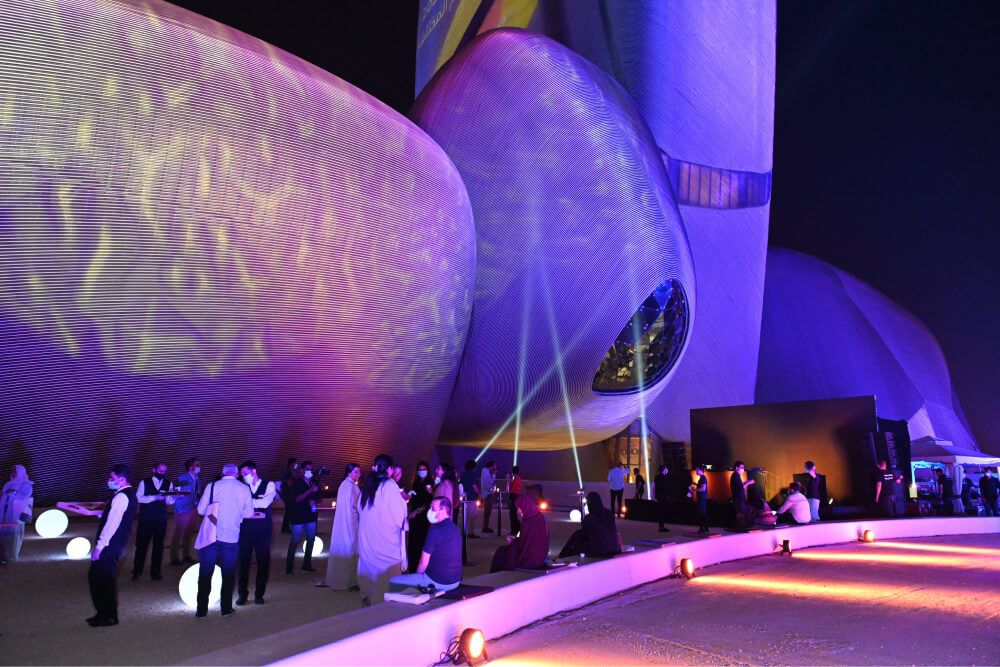
The winning design from this challenge, entitled “Faseelah Pavilion”, is a truly remarkable structure that embodies the essence of Saudi Arabia's abundance and prosperity by paying homage to its iconic palm tree. Highlighting its intricate anatomy, Faseelah captures the beauty of its leaves and trunk through a modular design approach, resulting in a tranquil space that emulates the experience of being under a palm tree, and inviting visitors to immerse themselves in its serene ambiance.
The project’s interpretation of Building Simplixity exemplifies a contextual approach, where the design seamlessly integrates with the surrounding environment. By cleverly utilizing straight lines in a curved manner and carefully selecting sustainable materials that harmonize with the context, the pavilion achieves a harmonious balance between simplicity and its surroundings. The essence of the palm tree, a key inspiration, is artfully woven throughout the calculated gradient design, providing visitors with a captivating under-the-tree experience.
To capture the texture of the palm tree, a parabolic section was employed as the simplest form, gradually transitioning from a smaller arch to a larger one. The exterior of the pavilion mimics the trunk, featuring a step-like structure that begins densely at one arch and gradually opens up, becoming sparser at the perpendicular arch. This design decision creates an intriguing play of light and shadow, reminiscent of the natural dappled patterns found within palm tree leaves.
By slicing this texture into beams and frames, the translation of the palm tree's leaves is elegantly revealed, resulting in a captivating display of the Moire effect. The interplay of light and shadow through these intricate patterns add depth and visual interest to the overall design, further enhancing the experiential quality of the space.
Faseelah is a remarkable architectural creation designed by Lujain Alatiq, Laian Abussaud, Sara AlMaddah, and Lama Dardas. In line with Ithra's commitment to inspiring and enriching local communities, this traveling pavilion has been showcased in various prominent locations. Starting from its debut at Ithra, it has visited several renowned public venues, including the Saudi Design Festival in Riyadh, King Abdullah Environmental Park in Al Hasa, Aramco Core Area, Khobar Corniche, and King Abdullah Financial District in Riyadh. It is currently installed at King Fahd University of Petroleum and Minerals, where locals can visit and enjoy this architectural interpretation of the beloved date palm.
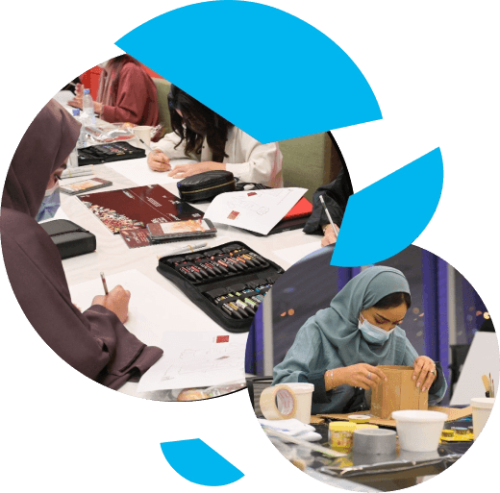
Inspired by the pavilion’s beauty, The Architecture Society at Ithra launched a spinoff to this challenge in 2022 entitled “Faseelah Stool”, where participants competed to design a sitting stool to be installed under the Faseelah Pavilion. The participants also engaged in a rich and comprehensive experience that spanned over ten sessions, including brainstorming, workshops, and field visits. Just as the palm tree was the source of inspiration for the Faseelah Pavilion, it also inspired the methodology of designing its stools. The final stool design, created by participant Sharifa Al Amer, demonstrated a deep understanding of the palm tree's structure and a skillful translation of its details into an innovative and comfortable stool.